
Ethics and Privacy in the Age of ACR: Who Is Watching the Viewers?
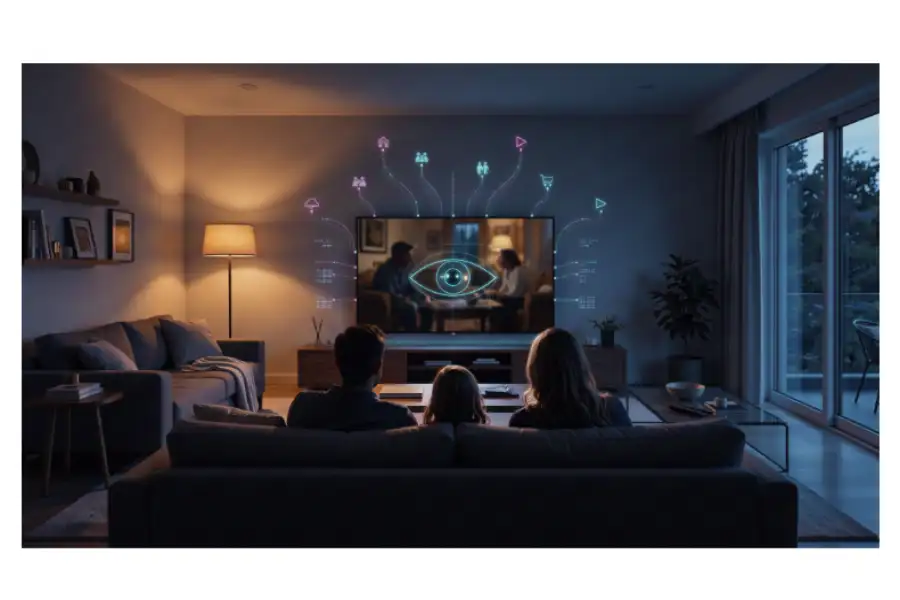
Most people think of a television as something they look at. Far fewer think of it as something that looks back. Yet many smart TVs sold over the past decade include software that quietly works out what is on the screen, whether it is a football match, a streaming drama or a game console menu, and reports the answer to a server. The feature is called automatic content recognition, and for years it has operated in the background of living rooms with very little public attention.
That attention has arrived. In December 2025, the attorney general of Texas sued five of the biggest names in consumer electronics, accusing them of turning ordinary televisions into tools for tracking households. The case dragged a niche subject into the open: who profits when a machine watches what you watch, and what did viewers agree to? Behind the headlines sits a wider group of automatic content recognition companies, from television makers to measurement firms and advertising platforms, whose business models depend on the answer. This article explains how the technology works, why it worries privacy advocates, and how regulators and courts are starting to respond.
What ACR Does: A Short Definition
The simplest definition of automatic content recognition is a system that identifies media by examining the media itself. It does not rely on a title typed in by a user or a label supplied by a broadcaster. Instead, software samples a few moments of sound or picture, turns that sample into a compact numerical signature, and compares it against a reference library. If the signature matches, the system knows what is playing.
Anyone who has held a phone up to a speaker to identify a song has used the idea. Shazam is the most familiar of the examples. On televisions, the same principle runs continuously. Reports on the Texas complaints describe the software capturing frequent snapshots of the screen, as often as twice a second, and matching them against a database. The recognition can cover cable, streaming apps and anything plugged into the set, including a games console or a laptop.
Not every use is controversial. Broadcasters use recognition to sync second-screen apps with a live show. Rights holders use it to spot pirated uploads. Music services use it to identify tracks. Software hides plenty of background behavior like this, and learning to spot it is the same skill that turns up hidden features in everyday apps. The privacy debate centers on one particular application: recognition installed in a consumer device that reports back what its owner watches.
Who Earns Money From the Signal
The commercial logic is straightforward. Knowing what households watch is valuable to advertisers and to measurement firms, because it shows which commercials were seen and which programs draw which audiences. Television makers can sell that insight, or the ad space it makes more valuable, and some now earn more from their software and advertising businesses than from the hardware itself.
The acr technology market reflects the appeal. Analyst estimates vary widely, which is itself a warning to treat any single figure with care. Different research houses put the global market between roughly four and six billion dollars for 2025, with forecasts running to well above ten billion by the early 2030s. Mordor Intelligence, for one, valued the US automatic content recognition market at about 1.15 billion dollars in 2025 and said smart TVs accounted for nearly two thirds of it. The same report points out that ad tracking is overtaking audience measurement as the main use, which tells you where the money is heading.
The companies in this space fall into a few groups: television manufacturers with their own platforms, specialist firms that supply recognition software and analytics to those manufacturers, measurement and data businesses, and advertising technology firms that turn viewing records into audiences they can sell against. A single set can involve several of them, and a viewer who reads one privacy notice may never learn about the others.
What the Data Can Reveal
Supporters often describe viewing records as harmless, a list of shows and channels. Critics answer that a long enough list is anything but harmless. Viewing habits can point to political leanings, religious practice, health concerns, sexual orientation, financial worries or the presence of children. A household that watches addiction recovery programs, immigration news or a particular faith channel is telling the system something personal, even if it never types a word.
Several features make the data harder to treat casually. The unit being watched is a household, not a person, so guests, children and housemates are swept in without ever clicking anything. Recognition that covers every input records what is on the screen no matter where it came from, including personal videos or content from a console. And once a viewing record is linked to an IP address or device identifier, it can be matched with other data held by brokers, such as purchase history or location. Companies often promise that the information is anonymized, but researchers have repeatedly shown that supposedly anonymous datasets can be tied back to individuals when enough fields are combined.
Consent: A Button Almost Nobody Reads
Everyone agrees that viewers should be told what is happening and given a real choice. The dispute is about whether they are. Setting up a new television usually means clicking through a series of screens offering personalized recommendations, extra features and agreement to terms of service. The recognition feature is typically folded into one of them. Software has a habit of burying its most important switches in setup screens, a pattern familiar to anyone who has combed through Windows 11 tips and tricks to find where a setting went. Developers tuck Easter eggs away the same way, but an Easter egg is a harmless joke, while this switch decides what leaves your living room.
The Texas complaints argue that the wording is the problem. According to the lawsuits, the screens describe the feature in vague or flattering language, and one maker allegedly labeled its program a “viewing information agreement,” a phrase that does not tell an average person that a screen is being sampled many times a minute. The state also accused the companies of using dark patterns, interface designs that push people toward the option the company prefers, through bright buttons, pre-checked boxes or choices that are hard to reverse.
The legal and ethical idea behind these complaints is informed consent. Agreeing to something you do not understand is not much of an agreement. Privacy scholars also point to consent fatigue: people face so many permissions that they click through them all without reading, and companies know it.
The Vizio Precedent
None of this is entirely new. In 2017, the US Federal Trade Commission and the New Jersey attorney general reached a settlement with television maker Vizio, which agreed to pay 2.2 million dollars. Regulators had charged that the company tracked what viewers watched on millions of sets, second by second, and sold that information to third parties without clear disclosure. The case established that television viewing data can fall under consumer protection law. It did not, however, end the practice. It pushed the industry toward opt-in screens and more careful wording, and many consumer advocates argue that the changes were more cosmetic than real.
Texas Takes the Stand
The 2025 lawsuits went further. Texas filed against Sony, Samsung, LG, Hisense and TCL, alleging violations of the state’s consumer protection law. The complaints describe the televisions as surveillance devices and say the companies collected far more data than the sets need to work. The two Chinese-based defendants, Hisense and TCL, also faced allegations that viewing data could be exposed to the Chinese government, a claim they and other observers have treated as a separate political argument from the consent question.
Early rulings were mixed. A temporary restraining order against Hisense was granted, while one obtained against Samsung was vacated within a day. Then the cases began to resolve through agreement. Samsung settled in February 2026, agreeing to stop collecting recognition data from Texas consumers without express consent and to redesign its on-screen notices. LG followed in May 2026, accepting a pop-up disclosure, a clear opt-out and a ban on sending viewing data to the Chinese government. Neither admitted wrongdoing. As of the most recent reports available, cases against Sony, Hisense and TCL were still pending.
These were allegations and negotiated settlements, not findings of fact by a court. The companies say consumers control their privacy settings. Even so, the settlements set a template that other makers may feel pressure to copy: clear, conspicuous notices, consent before collection, and an easy way out.
The Wider Rulebook
The United States still has no single federal privacy law covering viewing data. Instead, there is a patchwork. The FTC can act against unfair or deceptive practices. A growing number of states, including California, Virginia and Colorado, give residents rights to know what is collected, to opt out of the sale or sharing of their data and, in some cases, to limit the use of sensitive information. Texas leaned on its general deceptive trade practices statute instead of a dedicated privacy law, which shows how enforcers use whatever tools exist.
Europe takes a firmer line. Under the General Data Protection Regulation, information linked to an identifiable device or household counts as personal data, and companies generally need a valid legal basis, usually freely given and specific consent, before processing it. Rules on accessing information stored on devices add another layer. The European approach treats the starting position as no tracking unless the viewer says yes, rather than tracking unless the viewer says no.
The Industry’s Side of the Argument
The companies have a case. Many say recognition is an opt-in feature, disclosed during setup, and that people who decline can still use the television. They argue that targeted advertising pays for free or cheap content, and that heavily subsidized hardware prices depend on software revenue. Viewers, the argument goes, get more relevant ads and better recommendations in exchange.
There is something to that. Ad-supported television is a real business, and measurement is how it keeps running. But critics reply that a trade is only fair if both sides understand its terms. A bargain that most buyers do not know they have made is not one they can weigh. And the benefits of relevant ads are modest next to the risks of detailed, long-lived viewing profiles that could leak, be sold or be demanded by authorities.
What Viewers Can Do Today
Settings differ by brand, but there are common steps. Look in the privacy, general or advertising menus for items named after viewing information, live plus, smart TV experience or interactive TV, and switch them off. Menus are layered, as anyone who has hunted for developer options on an Android phone knows, so check each submenu rather than stopping at the first screen. Turn off personalized advertising and reset the advertising ID where the option exists. Keep in mind that disabling these features can reduce recommendations and some smart functions. Consumer groups also suggest that people who want maximum privacy can connect the TV to a separate streaming box and keep the set itself offline, although that has its own tradeoffs. A few minutes in the settings menu can save a lot of worry later.
Toward Better Practice
Many experts argue that fixing this problem needs more than clearer screens. They suggest that recognition should be off by default and that the name of the feature should say what it does, for instance “record what is on your screen and share it for advertising.” Each input, whether broadcast, streaming or console, could carry its own switch. Data should be kept for a limited time, shared only with named partners and open to independent audit. And buyers should be able to refuse the feature without losing the television’s basic functions.
Some phones already work in this spirit: Android’s automatic reboot security feature runs without the owner having to dig through settings to find it. Televisions could follow that example, turning protection into a default instead of a hidden option.
Those are design choices that companies could make tomorrow. Whether they will do so voluntarily or only under legal pressure is the central question for the industry.
A Window That Looks Both Ways
A television has always been a window onto the world. Automatic content recognition makes it a window that also looks back into the room, and that is not inherently wrong. Plenty of people are happy to trade a little information for better programming. The ethical test is whether the trade is fair and open: whether viewers know what is being taken, why, and by whom, and whether they can say no without penalty. The Texas settlements, the older Vizio case and the growing patchwork of state laws all point toward the same simple standard. If a company wants to watch its viewers, it should be willing to say so plainly and let them decide.